
Environmental Degradation of Petroleum Coke: Risks to Safety in Confined Spaces
Article Sidebar
Published
May 2, 2025
Main Article Content
Abstract
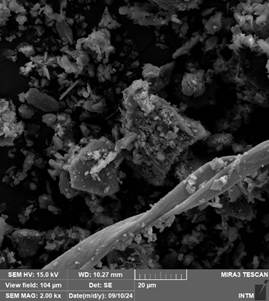
Microstructural characterization of materials can be a decisive tool for identifying conditions that intensify chemical risks in industrial confined spaces. This study investigates the storage of petroleum coke inside an industrial tunnel, analyzing microstructural changes in the material using Scanning Electron Microscopy (SEM). The research highlights how environmental variables such as moisture and soil contact influence the composition and stability of the coke. The analyses revealed significant differences between samples collected from the yard (dry appearance and standard composition) and those from inside the tunnel (moist, heterogeneous, and with a higher presence of fine particles – PM10). The interaction of elements such as carbon, iron, silicon, and aluminum in humid environments can increase health risks for workers and raise the likelihood of critical events such as explosions. The findings reinforce the importance of microstructural analysis not only as a technical diagnostic tool but also as a strategic foundation for planning control measures, including the development of ventilation plans tailored to the confined space environment.
Downloads
Download data is not yet available.
Article Details
How to Cite
Estolano, A., Sá, L., Lago, E., & da Cruz, F. (2025). Environmental Degradation of Petroleum Coke: Risks to Safety in Confined Spaces. Journal of Engineering and Applied Research, 10(2), 1-6. https://doi.org/10.25286/repa.v10i2.3157
Section
Segurança e Saúde do Trabalho

This work is licensed under a Creative Commons Attribution-NonCommercial 4.0 International License.