
Análise do Erro Humano nos Rótulos de Bases de Dados de Detecção de Objetos
##plugins.themes.bootstrap3.article.sidebar##
Publicado
Dec 11, 2025
##plugins.themes.bootstrap3.article.main##
Resumen
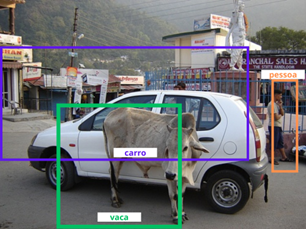
A detecção de objetos é uma tarefa importante em visão computacional, aplicada em áreas como vigilância por vídeo, veículos autônomos e reconhecimento facial. Avanços em redes neurais convolucionais e aprendizado profundo têm melhorado a precisão dos modelos de detecção, mas a eficácia desses sistemas depende da qualidade das bases de dados rotuladas. A anotação manual de imagens, especialmente em cenas complexas com múltiplos objetos, é um processo trabalhoso e suscetível a erros, o que pode comprometer o desempenho dos modelos treinados. Neste estudo, 30 participantes realizaram um experimento de rotulagem, analisando a influência da complexidade das imagens em três níveis de dificuldade. O Nível 1 envolvia até 4 objetos, o Nível 2 de 4 a 10 objetos, e o Nível 3 mais de 10, com variações na área ocupada por cada objeto e nas classes representadas. Os resultados mostraram que a complexidade crescente das imagens elevou significativamente o número de erros cometidos, com variações nas médias e desvios padrões. Esses resultados evidenciam que as discrepâncias na rotulagem manual de diferentes indivíduos podem comprometer a eficácia dos modelos de detecção.
Descargas
La descarga de datos todavía no está disponible.
##plugins.themes.bootstrap3.article.details##
Cómo citar
dos Santos, D., Silva, A., de Souza Silva, L., Maciel de Sousa, R., Freire, A., & Torres Fernandes, B. (2025). Análise do Erro Humano nos Rótulos de Bases de Dados de Detecção de Objetos. Revista De Engenharia E Pesquisa Aplicada, 10(3), 43-54. https://doi.org/10.25286/repa.v10i3.3122
Sección
Engenharia da Computação
